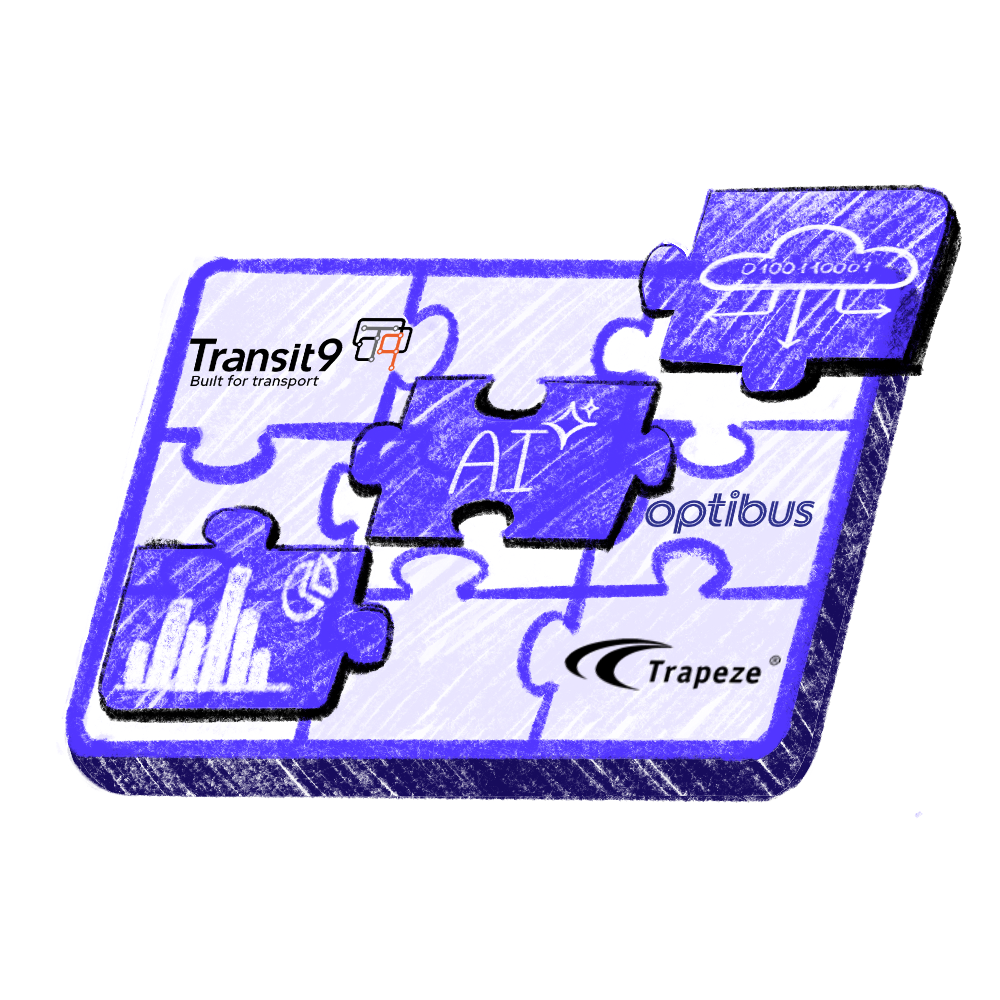


Built around real operator workflows
The framework reflects how control rooms, mileage clerks, finance teams, and managers actually work across live services, reporting, and compliance.

Operational control for bus operators without system replacement.
Connect scheduling, operations, finance, and reporting data so bus operators can reduce manual reconciliation, act on the same trusted numbers, and improve control without replacing core systems.
One trusted operating picture
Lower manual reconciliation
AI-ready data foundations
BusOps is built to turn fragmented operational data into faster decisions, stronger controls, and less avoidable manual work.
BusOps is designed for the realities of live bus operations and for leaders who need visible improvement without a disruptive rip-and-replace programme.
The framework reflects how control rooms, mileage clerks, finance teams, and managers actually work across live services, reporting, and compliance.
Improvement starts by connecting what already exists, so operators can reduce risk and cost before considering wider platform change.
Once data and workflow ownership are in place, AI automation can be applied where it improves decisions, reporting speed, and operating ROI.
BusOps can start with the workflow or reporting bottleneck causing the most cost, delay, or management friction, then expand from there.
The framework is grounded in delivery work across incident management, lost mileage reconciliation, reporting automation, and operational visibility for bus operators.
iQberry integrated source data, validation, and approvals so specialist teams could work in one governed process instead of chasing spreadsheets, inboxes, and fragmented records.
Operational workflows were rebuilt around integrated schedules, duties, driver data, standardised reason codes, and stronger traceability.
Real-time dashboarding gave operations, finance, and management a shared view of trends, route issues, and root causes early enough to act.
We start with a focused assessment of the workflows, data gaps, and reporting pressure that are costing your operation time, control, or confidence.
A BusOps engagement produces concrete outputs that help you move from fragmented workflows to governed operational control.
A clear view of where handoffs, reporting loops, data gaps, and control points are creating delay, risk, or duplicated effort.
Standard KPI definitions, ownership rules, and system connections that create one trusted operating picture across operations, finance, and management.
A practical design for the workflow automations, validations, dashboards, and alerts that should be introduced first.
A sequenced plan that prioritises the highest-friction workflows first and builds toward broader operational visibility and AI-ready data foundations.
BusOps fits operators that already have core systems in place but still lack a trusted, joined-up view of day-to-day operations.
Teams using scheduling, operations, finance, and reporting systems that do not work together well enough to support live decisions.
Operators where manual reconciliation, slow reporting, and weak traceability are increasing compliance risk, rework, or management friction.
Decision-makers who need visible improvement, stronger data foundations, and practical AI automation without a large-scale replacement programme.
A four-stage approach that starts with operational reality, then builds toward stronger control, visibility, and AI automation.
Review the workflows, systems, handoffs, and reporting pressures that are creating the most operational drag.
Bring operational, financial, and performance data into one governed structure with shared KPI definitions.
Replace manual reconciliation, validation, and reporting loops with governed workflow automation triggered by real events.
Give each team the visibility, alerts, and trusted reporting views they need to act earlier and with more confidence.
These are the patterns BusOps is designed to fix before they turn into avoidable cost, penalties, or operational blind spots.
Critical tasks are split across multiple systems, spreadsheets, and inboxes, which makes reconciliation slow and error-prone.
Operations, finance, and management rely on different KPI definitions, so teams lose time debating the data instead of acting on it.
Issues only become obvious after service impact, overtime, or penalty exposure has already happened.
Manual reporting cycles and weak traceability increase workload, create rework, and make audits harder than they should be.
Identify the right AI bets, then deliver the first one.
Reliable reporting, data governance, and AI-ready data foundations.
Senior technology leadership, when you need it.
Custom software built around operational reality.
Clear technical evidence for investment, acquisition, and board decisions.
Your idea stays protected with a mutual NDA in place.
You share. We listen and ask questions to stay focused on goals.
You get a clear project roadmap.
Together we define alignments to what matters most.
You see momentum fast as we turn the plan into action.
Your idea stays protected with a mutual NDA in place.
You share. We listen and ask questions to stay focused on goals.
You get a clear project roadmap.
Together we define alignments to what matters most.
You see momentum fast as we turn the plan into action.
We'll get back to you within 24 hours.